
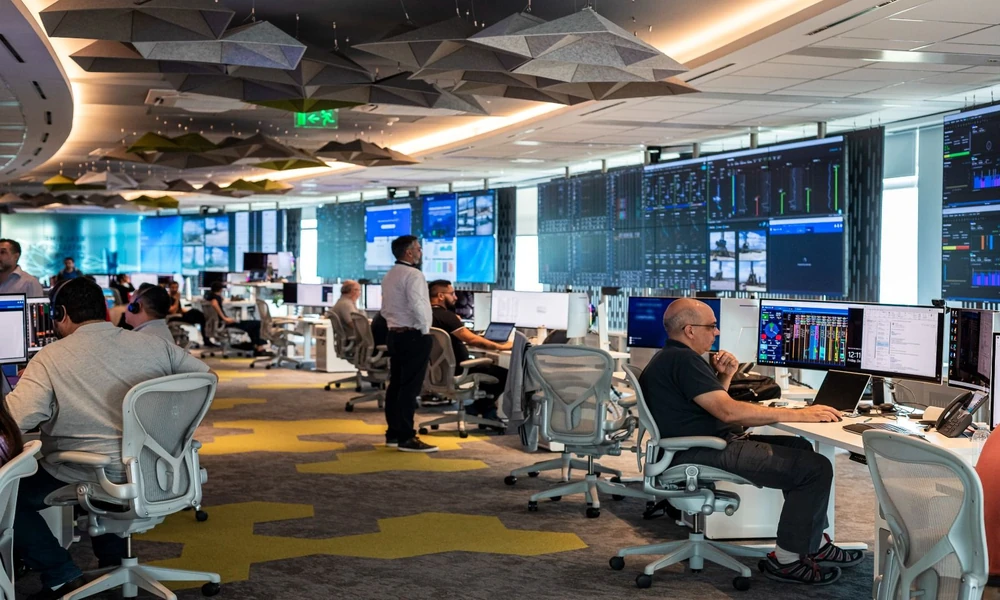

“24/7 monitoring” appears in nearly every home security ad written in the past decade. Few ads explain who’s actually staffing that monitoring, how fast they respond, or how much those details vary from one provider to the next. A handful of industry accreditations exist specifically to measure that variation, and most homeowners never learn they exist before signing a contract.
UL Certification Verifies the Building, Not the Company
UL 827 is the standard Underwriters Laboratories uses to certify central-station alarm monitoring facilities. It covers the physical plant a center runs on: backup power generators, redundant communication lines that keep signals moving if one path fails, and the equipment handling incoming alerts, not the marketing claims layered on top of it. A UL-certified center must verify an incoming alarm signal within 90 seconds and dispatch an appropriate emergency response from there.
The certification also requires trained operators following documented response protocols, and it isn’t granted once and forgotten. UL conducts recurring audits of certified facilities to confirm the standard is still being met. That’s a different guarantee than a company simply stating it takes monitoring seriously. A center can lose the certification if a later audit turns up gaps that weren’t there the year before.
Five Diamond Certifies the People Answering the Phone
Where UL certification is about the facility, the Five Diamond designation from The Monitoring Association is about the people working inside it. To earn it, a monitoring center must have 100% of its operators certified through TMA’s training program, submit to random inspections by an independent testing lab, and commit specifically to reducing false dispatches. The false-dispatch commitment is the sharpest of the five: it measures whether a monitoring center’s judgment calls are actually accurate, not just whether the lights stay on during a storm.
Recertification isn’t automatic, either. Operators have to requalify every three years, so the credential reflects current training, not a one-time exam passed years earlier. A center that let its Five Diamond status lapse would have to prove, again, that its staff still meets the bar, not just point back to a certificate on the wall. A system, professionally installed, already includes that vetting, instead of leaving a homeowner to research monitoring credentials alone after a contract is already signed.
Membership Alone Verifies Very Little
Belonging to The Monitoring Association is not the same thing as earning its Five Diamond designation. Plenty of monitoring companies are dues-paying members of an industry association without having met any operator-training or inspection requirement at all. Membership signals participation in the industry conversation. It says nothing about how a specific center trains its staff or handles a signal at 3 a.m.
That difference is exactly why the false-alarm problem persists at the scale it does. Between 94 and 98% of the burglar-alarm calls police respond to turn out to be false, according to the Department of Justice’s own research, and much of that traces back to monitoring judgment rather than faulty equipment. A center that’s actually earned accreditation, not just joined a trade group, is the one being measured against that failure mode. Reducing false dispatches is a named requirement of Five Diamond. It isn’t part of plain membership at all.
Put the three standards side by side and a pattern shows up. UL certifies the building and its equipment. Five Diamond certifies the people and their training. Plain membership certifies almost nothing beyond a paid due. A provider can genuinely hold all three, two, one, or none, and a sales page rarely spells out the difference.
Questions Worth Asking Before Signing Up
None of this shows up on a sales call unless a buyer asks for it directly. Before signing up with any provider, whether self-monitored or professionally installed, ask the following questions:
- Is the monitoring center itself UL-certified, and does that certification cover the specific service being sold, not just the equipment?
- Does the center hold the TMA Five Diamond designation, or only general association membership?
- What is the documented signal-verification and dispatch time, in writing, not as a marketing estimate?
- How often are operators recertified, and is that requirement independently audited or self-reported?