
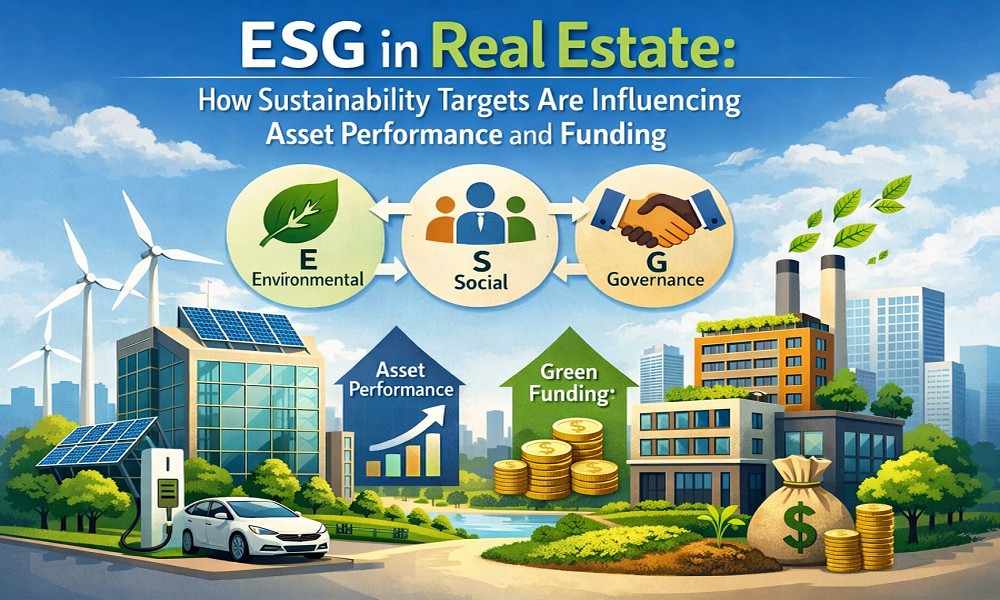

Environmental, social and governance considerations have moved from the margins of property investment to the centre of strategic decision-making. What was once treated as a reputational add-on is now a core determinant of asset value, tenant demand and access to capital. As regulatory frameworks tighten and occupiers become more selective, sustainability performance is increasingly shaping how real estate is developed, managed and financed. Investors and market commentators, including Ali Ata, have observed that ESG integration is no longer optional for those seeking long-term resilience in competitive markets.
From an environmental perspective, energy efficiency has become a defining factor in asset performance. Buildings account for a significant proportion of global carbon emissions, placing pressure on landlords to improve insulation, heating systems, lighting and overall operational efficiency. In the UK, minimum energy efficiency standards are already influencing leasing potential, with poorly rated properties at risk of becoming unlettable without significant upgrades. As a result, capital expenditure planning now often includes retrofitting strategies designed to future-proof assets against regulatory change.
Sustainability credentials also influence tenant attraction and retention. Corporate occupiers are under growing pressure to meet their own carbon reduction targets, and leasing space in energy-inefficient buildings can undermine those commitments. High-performing, environmentally certified buildings can command stronger occupancy levels and, in some cases, rental premiums. This dynamic shifts ESG from being a compliance issue to a revenue driver. Assets that fail to adapt may face accelerated obsolescence, reducing both income security and long-term value.
The “social” dimension of ESG is equally important. Mixed-use schemes with accessible public spaces, residential developments with community amenities and commercial buildings that prioritise occupant wellbeing all contribute to broader social impact. Features such as natural light, air quality monitoring and flexible workspaces can enhance user experience while supporting productivity. Investors are increasingly aware that socially responsible developments often align with stronger brand perception and improved tenant satisfaction.
Governance ties these elements together. Transparent reporting, robust data collection and clear sustainability targets are essential for maintaining investor confidence. Institutional capital providers are demanding greater disclosure around environmental performance and risk management. Green financing instruments, including sustainability-linked loans and green bonds, are becoming more prevalent. These funding structures often offer preferential terms for assets that meet defined environmental benchmarks, creating a direct financial incentive for ESG compliance.
However, integrating ESG into real estate portfolios is not without challenges. Retrofitting older buildings can require substantial upfront investment, and measuring performance accurately across diverse portfolios demands sophisticated data systems. There is also the risk of “greenwashing,” where superficial claims undermine credibility. Genuine commitment requires long-term planning, consistent monitoring and a willingness to adapt strategies as standards evolve.
Taken together, ESG considerations are reshaping how value is defined within real estate markets. Sustainability performance now influences tenant demand, operational costs, financing access and exit pricing. As regulatory and societal expectations continue to rise, assets that embed ESG principles at their core are likely to demonstrate stronger resilience, while those that lag behind may face mounting pressure to catch up.